Let's cut through the noise. Everyone's talking about the "next big thing," but most of that talk is vague. I've spent the last decade analyzing market shifts, from the quiet rise of cloud computing to the messy but real revolution in electric vehicles. The pattern is always the same: real growth isn't about a single flashy product. It's about sectors being reshaped by unstoppable, converging forces.
Based on the tectonic plates shifting beneath the global economy—not just tech, but demographics, climate imperatives, and a fundamental rethink of how we live and work—I see three core sectors not just growing, but fundamentally redefining value. This isn't about picking stocks. It's about understanding where capital, innovation, and high-paying careers will concentrate for the next decade.
What You'll Find in This Guide
The Forces That Actually Move Markets
Forget crystal balls. You spot durable trends by looking at problems that must be solved and behaviors that have permanently changed. I track reports from places like the World Economic Forum and McKinsey Global Institute, but the real insight comes from talking to people on the ground—founders, factory managers, city planners.
Four drivers are inescapable:
- The Productivity Imperative: Stagnant growth and aging workforces mean doing more with less isn't optional. This goes far beyond office software.
- The Physical Climate Transition: Net-zero pledges are now binding on corporations and cities. The money is moving from pledges to physical assets—grids, factories, materials.
- Demographic Inertia: More older people, fewer young workers. This isn't changing. It demands new healthcare models and tools for independent living.
- Supply Chain PTSD: The fragility exposed in recent years triggered a permanent shift towards resilience, redundancy, and bringing production closer to home.
These aren't predictions. They're current realities accelerating. The sectors that win will be those providing the tools and solutions for this new operating environment.
A quick note from my experience: I used to think cleantech was a subsidy-driven rollercoaster. Then I visited a mid-sized industrial town retrofitting its entire municipal fleet and building a microgrid. The mayor wasn't an environmentalist. He was an accountant who showed me the 20-year cost savings. That's when it clicked—the economics have flipped. The transition is now a capital investment story, not a charity case.
Sector 1: The Intelligence Layer - AI & Automation (Beyond ChatGPT)
If you think AI is about writing emails, you're missing the trillion-dollar story. The real action is in applying intelligence to physical processes and complex decision-making. This is the sector that will eat the world, quietly.
I'm talking about applied AI in industrial and commercial settings. After chatting with a founder whose company uses computer vision to spot microscopic defects in semiconductor wafers—saving a fab plant millions per month in waste—the scale became clear. The opportunity isn't in making the AI model. It's in integrating it into the dusty, gritty, expensive workflows of the real economy.
Where the Real Jobs and Investments Are
Don't just learn to prompt. Look at these specific domains:
- Predictive Maintenance & Operations: Software that tells a wind farm which turbine gearbox will fail in 6 weeks, or tells a logistics company which truck needs servicing before it breaks down on a highway. The value is in avoided downtime.
- Robotic Process Automation (RPA) on Steroids: Not just copying data between screens, but systems that can interpret unstructured documents (invoices, contracts, emails) and make logical decisions. The back offices of insurance, finance, and healthcare are ripe for this.
- Generative Design for Engineering: AI that proposes thousands of design variants for a car part or a building foundation, optimizing for weight, strength, and material use. It's creating a new kind of engineer-designer hybrid role.
The barrier? It's not the AI. It's the domain knowledge. The most successful teams I've seen pair machine learning experts with a grizzled veteran who's spent 30 years in the specific industry. The veteran knows what questions to ask; the AI expert builds the tool to answer them.
Sector 2: The Infrastructure Rebuild - Renewables, Green Tech & Circular Systems
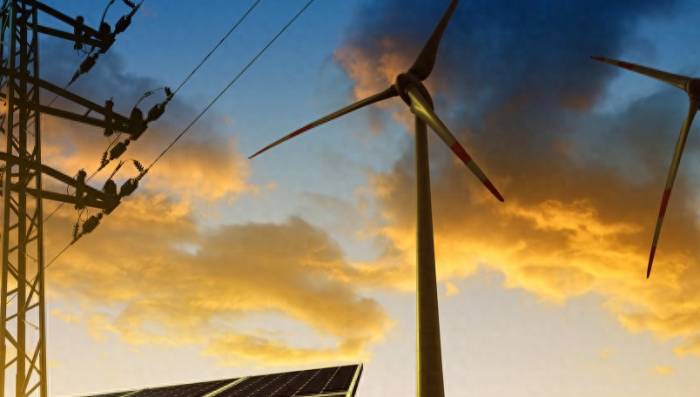
This is the most capital-intensive shift of our lifetimes. We're not just adding solar panels. We're rebuilding the backbone of the industrial world. The Inflation Reduction Act in the US and the European Green Deal aren't short-term stimuli; they are multi-decade industrial blueprints.
The growth will be in companies that provide the hardware, software, and services to enable this rebuild. It's less about the panel manufacturer and more about the company that designs, finances, installs, and manages the entire system for a school district or a manufacturing plant.
| Sub-sector Focus | Core Opportunity | Why It's Durable (Not a Bubble) |
|---|---|---|
| Grid Modernization & Storage | Battery systems (not just lithium), smart grid software, demand response platforms. | Renewables are intermittent. The grid wasn't built for that. Upgrading it is a non-negotiable, ongoing national security and economic priority. |
| Electrification of Everything | Heat pumps, industrial electric boilers, EV charging infrastructure (especially for fleets). | Building codes are changing. Corporate sustainability mandates require switching from gas. The replacement cycle for industrial equipment is long, creating a guaranteed pipeline. |
| Circular Economy & Materials | Advanced recycling tech, material traceability software, bio-based alternatives to plastics/chemicals. | Resource scarcity and consumer pressure are forcing brands to design for recyclability and use recycled content. This creates a whole new supply chain. |
I visited a startup developing a chemical process to recycle mixed plastics back into food-grade material. The science was complex, but the business case was simple: major beverage companies are legally obligated to use more recycled plastic and can't get enough. They have multi-year offtake agreements lined up before the factory is even built. That's demand-driven growth.
Sector 3: The Human Priority - Health Tech & Services for an Aging World
Demographics are destiny. With a massive cohort entering their 70s and 80s, combined with a shortage of caregivers, the system will break unless we innovate. This isn't just about finding a cure for Alzheimer's (though that's huge). It's about enabling management, independence, and efficiency at a societal scale.
The growth here is bifurcating:
- High-Tech Med & Diagnostics: GLP-1 drugs for obesity (a market that reshaped entire pharma valuations), AI for early disease detection in medical imaging, personalized cancer vaccines. The science is delivering now.
- Tech-Enabled Care Delivery & Aging in Place: This is the less glamorous, massive opportunity. Remote patient monitoring platforms, medication adherence tools, fall detection sensors, and the logistics networks to deliver care and supplies to homes. The goal is to keep people out of the expensive hospital as long as possible.
A friend's startup makes a simple, voice-activated pill dispenser that connects to a family app. It's not sexy. But after she showed me the data on hospital readmissions due to medication errors—and the fact that insurers will pay for the device to avoid a $15,000 hospital stay—the model made perfect sense. It's a tech wrapper around a profound human need.
The regulatory hurdle here is high, but that's also the moat. Once you get FDA clearance or insurer reimbursement codes, you have a formidable barrier to entry.
Straight Answers to Your Practical Questions
I'm not a tech engineer. How can I position myself for these high-growth sectors?
This is the most common misconception. These sectors need more than coders. They need project managers who understand construction timelines for solar farms. They need salespeople who can speak to hospital administrators. They need regulatory affairs specialists who can navigate energy permits or FDA submissions. The key is to develop sector-specific knowledge. Take a course on grid fundamentals or healthcare reimbursement models. Pair your existing skill (marketing, finance, operations) with deep immersion in one of these verticals. You become the bridge.
Aren't AI and green tech already overvalued and crowded with competition?
They are crowded at the surface level. Everyone wants to build the foundational AI model or the next big solar panel brand. The real whitespace is in the integration layer and specialized applications. Look for problems in mature, boring industries that haven't been digitized. A company making AI software for optimizing fertilizer use on farms faces less hype-driven competition than a consumer AI app, but its economic impact is enormous. The valuation might be more sensible too.
What's the biggest mistake you see people make when trying to invest in these trends?
Chasing the headline name. They buy the stock of the famous EV company or the hyped AI chipmaker. Often, the bigger, more stable returns are in the picks-and-shovels providers—the companies making the specialized sensors, the testing equipment, the enterprise software that all these flashy companies need to operate. These businesses have recurring revenue, less volatile stock prices, and are essential regardless of which brand wins the consumer battle. Do the boring work of looking at supply chains.
Is it too late to pivot my career or business into one of these areas?
We are in the second inning of a nine-inning game. The infrastructure build-out alone will take 25 years. The integration of AI into global industry is maybe 10% complete. The demographic wave ensuring healthcare growth is locked in for 30 years. The question isn't timing, it's angle of entry. Don't try to start the next OpenAI. Find a specific, painful, expensive problem within one of these macro sectors and solve it for a well-defined customer. Start as a consultant, build a niche service, then productize it. The wave is big enough for many, many boats.
The path forward isn't about betting on a single company or a fleeting trend. It's about aligning your skills, investments, or business with these deep, structural currents. The sectors I've outlined—Intelligence, Rebuilt Infrastructure, and Human Health—aren't speculative. They are the necessary responses to the world's most pressing operational and demographic challenges. The growth will be lumpy, and there will be failures, but the direction is set. The time to build your understanding, and your position, is now.
This analysis is based on ongoing tracking of market data, policy developments, and direct conversations with operators across these industries.